


6 Best Practices for Post-Construction Cleaning in Commercial Buildings
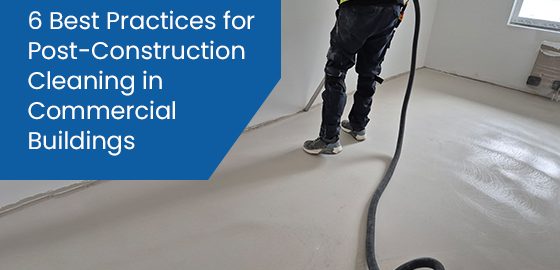
A completed construction project is not necessarily ready for employees, tenants, or customers. Renovations and new builds often leave fine dust, packaging, paint marks, adhesive residue, and loose materials throughout the space. Even areas well beyond the immediate work zone may need attention because dust can travel through doorways, foot traffic, and ventilation systems.
Post-construction cleaning requires more than a quick sweep and surface wipe. The work must be planned in the right order, matched to the new finishes, and checked carefully before furniture or equipment is moved into place.
These six practices can help contractors, property managers, and business owners prepare a commercial building for handover and occupancy.
Post-Construction Cleaning: 6 Best Practices for Commercial Spaces
An effective construction cleanup usually progresses from rough debris removal to detailed surface work and a final inspection. Starting with finishing tasks too early often creates duplicate work because dust and debris from other areas continue to settle.
The scope should reflect the size of the project, the materials used, the condition of the site, and the deadline for occupancy.
1. Start With a Thorough Debris Removal
Large debris should be cleared before detailed cleaning begins. Common materials include cardboard, protective plastic, wood scraps, empty containers, packaging, offcuts, and leftover building materials.
Removing these items creates access to floors, walls, corners, and fixtures. It also reduces trip hazards and prevents cleaners from repeatedly moving around waste while handling more detailed tasks.
Debris must be sorted and disposed of according to the project’s waste plan and applicable local requirements. Cleaning crews should also confirm which materials belong to the contractor and which have been approved for disposal. Throwing out an unlabelled component or spare material can create an expensive little construction-site mystery.
Once the larger waste is gone, the team can assess how much dust, residue, and detailed cleaning remain.
2. Control Dust and Airborne Particles
Construction dust settles on horizontal surfaces, ledges, fixtures, window frames, and other areas that may not be obvious at first glance. Dry sweeping or using unsuitable equipment can stir fine particles back into the air rather than remove them.
Health Canada recommends damp wiping, wet mopping, and vacuuming with high-efficiency particulate air, or HEPA, filtration to reduce settled fine particles. It also notes that renovation activities can generate indoor particulate matter.
Work methodically from higher areas downward so falling dust does not soil finished surfaces. Tops of doors, exposed supports, light fixtures, vents, grilles, shelving, and other elevated areas may require high-level dusting or vacuuming. Internal duct cleaning, where needed, should be assessed separately and assigned to an appropriately qualified provider.
Filters and ventilation components may also need inspection after dusty construction work. Confirm the responsibility for this work with the contractor, building operator, or HVAC professional rather than assuming it is part of the general cleaning scope.
3. Clean and Disinfect All Surfaces
After dust has been brought under control, each surface should be cleaned with methods suited to its material and condition. Floors, walls, counters, windows, doors, washrooms, fixtures, millwork, and built-in furniture may all require different products or tools.
Paint splatters, adhesive, grout haze, labels, and other construction residue should be handled carefully. An aggressive scraper or unsuitable chemical can scratch glass, dull a finish, or discolour a newly installed surface.
Cleaning and disinfection serve different purposes. Cleaning removes dust, soil, and residue. Disinfecting uses an appropriate product on suitable surfaces according to its label directions. RBC Clean’s construction clean-up services include dusting, vacuuming, cleaning, sanitizing or disinfecting, scrubbing, washing, glass cleaning, carpet steam cleaning, floor finishing, and high-level work, depending on the agreed scope.
Before work begins, confirm which products are compatible with newly installed finishes and whether manufacturers have provided care instructions.
4. Pay Attention to High-Touch and Detail Areas
A room can look clean from the doorway while still holding fine dust in its details. Door handles, switches, railings, cabinet hardware, baseboards, outlets, ledges, window tracks, and plumbing fixtures all deserve inspection.
High-touch surfaces should be cleaned and disinfected where appropriate. Newly installed components may also carry fingerprints, labels, protective film, or residue from tradespeople and equipment.
Use a checklist arranged by room or zone rather than relying on memory. This makes it easier to track completed work and reduces the chance that a closet, utility area, stairwell, or back corridor will be missed.
Detail cleaning is particularly important in customer-facing spaces. Dust around a reception desk or adhesive left on a glass entrance can make an otherwise finished project appear incomplete.
5. Inspect and Polish for Final Presentation
The first cleaning pass should not be treated as the final approval. Fine dust can settle again after high areas are cleaned or after trades return to complete deficiencies.
Conduct a walkthrough under good lighting once the main work is complete. Inspect glass from different angles, check corners and floor edges, look above eye level, and test whether surfaces still feel dusty. Floors may need final vacuuming, washing, polishing, or refinishing based on the material and project requirements.
A checklist-based inspection gives the property manager, contractor, and cleaning provider a shared reference point. Record deficiencies clearly and assign responsibility for corrections before the occupancy date.
RBC Clean can also schedule construction cleaning in phases as sections of a project are completed, helping prepare areas for follow-on trades or final handover.
6. Use Professional Commercial Cleaning Services
A small renovation may be manageable with an internal team, but larger commercial projects often require more people, specialized equipment, and coordinated scheduling. High surfaces, large floor areas, extensive glass, fine dust, and several types of new finishes can make the work difficult to complete with ordinary janitorial tools.
Professional commercial cleaning services can coordinate rough, detailed, and final cleaning around the project schedule. The provider may also bring separate teams for window cleaning, carpet work, floor finishing, or high-level cleaning.
Before hiring, request a site assessment and a written scope. Confirm the areas included, expected condition at handover, responsibility for debris, required specialty services, deadline, and inspection process.
At RBC Clean, we coordinate multiple cleaning teams and tailor our post-construction services to the building, project requirements, and completion schedule.
Why Post-Construction Cleaning Matters for Commercial Buildings
Incomplete cleaning can leave loose debris in walkways, dust on new equipment, residue on finishes, and a poor first impression for occupants. It can also make final deficiencies harder to identify because damage or incomplete work may remain hidden beneath dust and packaging.
A structured clean supports a safer, more usable, and presentable handover. It helps contractors finish the project properly and allows property teams to prepare the space for furniture, equipment, employees, tenants, or customers.
Cleaning does not replace a building inspection or correct construction defects. It does make the completed work easier to assess and the property more practical to occupy.
Post Construction Cleaning for Your Next Project
Effective post-construction cleaning begins with debris removal, careful dust control, material-appropriate cleaning and disinfection, detailed inspection, and a clearly defined final standard. For larger or more complex commercial projects, professional coordination can help keep the work aligned with construction and occupancy deadlines. Located in Aurora and servicing all of Southern Ontario and the GTA, RBC Clean can tailor construction clean-up services to the property, project schedule, and required scope.
Reach out to RBC Clean today at 1-855-493-9259 or click here to get in touch online.
FAQ
What is included in post-construction cleaning?
The typical scope may include debris removal, dusting, vacuuming, floor cleaning, surface cleaning and disinfection, window cleaning, and the removal of construction residue. Specialty work may include carpet steam cleaning, high-level dusting, or floor finishing.
The exact services depend on the building, project size, new materials, and agreement with the provider. Construction cleanup is more detailed than routine janitorial cleaning because it addresses dust and residue created by building work.
How long does post-construction cleaning take?
The timeline depends on the size and condition of the space, the amount of debris and dust, the services required, and whether trades are still working.
Large projects may benefit from phased cleaning as different areas are completed. A site assessment is usually needed before a reliable schedule can be created.
Is post-construction cleaning necessary before occupancy?
A commercial space should be cleared of loose debris, excessive dust, and construction residue before regular use. This makes the property safer to navigate, easier to inspect, and more suitable for furniture, equipment, employees, tenants, and visitors.
The required cleaning scope will depend on the work completed and the condition left by the contractor.
Can regular janitorial staff handle construction cleanup?
Routine janitorial teams may be able to handle limited cleaning after a small project. Larger jobs can require high-filtration vacuums, high-level equipment, surface-specific products, heavier waste handling, and several cleaning passes.
Internal staff should not be assigned work beyond their training, equipment, or approved responsibilities. A professional construction-clean-up provider may be more suitable when the scope is extensive, or the deadline is tight.
How do you remove construction dust effectively?
Remove large debris first, then clean from high areas downward. Use HEPA-filtered vacuuming, damp microfibre cloths, and wet mopping to capture fine particles without repeatedly stirring them into the air.
More than one pass may be necessary because airborne particles can continue settling. Inspect vents, ledges, corners, baseboards, tracks, and other areas where fine dust commonly collects.