


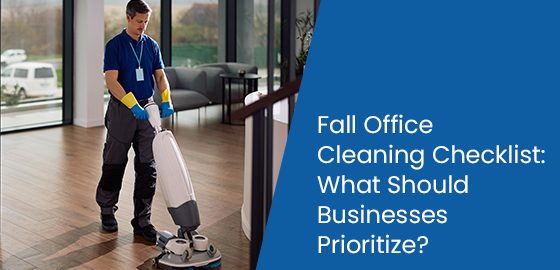
Fall Office Cleaning Checklist: What Should Businesses Prioritize?
As fall settles in, wet weather, leaves and outdoor debris can be tracked through entrances while employees and visitors spend more time indoors. It is a practical time to reassess whether day-to-day standards still match workplace needs. A useful office cleaning checklist helps decision-makers focus on the areas that affect daily cleanliness instead of treating every task as equally urgent.
A strong fall plan has three priorities: address heavily used spaces first, schedule deeper seasonal work that routine cleaning does not cover, and review the ongoing program before winter adds further demands.
| Priority | Focus | Purpose |
|---|---|---|
| 1 | Daily-use areas | Keep entrances, floors, washrooms and shared touchpoints consistently maintained. |
| 2 | Periodic deep cleaning | Address carpets, upholstery, windows and hard-to-reach areas routine work may miss. |
| 3 | Ongoing cleaning plan | Review frequencies, responsibilities, products and seasonal scope before winter. |
Priority 1: Address the Areas That Affect Daily Cleanliness First
Start with the spaces employees, customers and visitors use constantly. Entrances, shared rooms and frequently handled areas can quickly make an otherwise maintained office look or feel unclean, so they need regular attention throughout the season.
Entrances and High-Traffic Floors
Entrances are the first line of defence against fall dirt, water, leaves and debris being carried farther into the building. Check entry mats for saturation or visible soil, and pay close attention to the floor immediately around doors and reception areas. Small issues at the entrance can spread quickly as people move through the workplace.
As weather worsens, heavily travelled floors may need more frequent vacuuming, sweeping or mopping. Frequency should reflect traffic, flooring type and current conditions rather than a fixed seasonal rule.
Washrooms and Breakrooms
Washrooms and breakrooms are shared, high-use spaces where standards can decline quickly when cleaning does not keep pace with use. Sinks, counters, fixtures, floors, waste areas and frequently handled surfaces should be part of the regular routine, with the level of attention adjusted to actual workplace demand.
Cleaning and disinfecting are distinct steps. Where both are required, use products intended for each function and follow their label directions. Businesses should not assume that every general cleaning product is also a disinfectant.
Shared Touchpoints and Common Areas
Door handles, shared equipment, meeting-room surfaces, reception counters and other frequently handled areas also deserve regular review. Instead of assigning an arbitrary universal schedule, managers should consider how many people use each space and how often surfaces are touched throughout the workday.
Effective office cleaning depends on both scope and frequency. A checklist should identify what needs attention, but it should also make clear how often that work is expected to happen so recurring tasks do not become inconsistent.
Priority 2: Schedule the Deeper Cleaning That Routine Work Doesn't Cover
Once high-use areas are under control, fall is a useful checkpoint for work that can accumulate dirt, dust or wear over time. The goal is to identify periodic tasks routine maintenance may not fully address.
Carpets, Upholstery and Detailed Floor Care
Routine vacuuming and mopping help maintain everyday appearance, while deeper cleaning addresses buildup that ordinary maintenance may leave behind. Inspect carpets, upholstered furniture and hard flooring for visible soil, staining, traffic patterns or other areas where routine work no longer seems sufficient.
Deeper carpet, upholstery or floor care may be appropriate when visible buildup remains despite regular maintenance. The timing should be based on the condition of the materials and how heavily they are used, rather than applying the same schedule to every workplace.
Windows and Hard-to-Reach Areas
Interior glass, windows, ledges and other details can be easy to overlook during everyday routines. Fall provides an opportunity to review these areas and decide whether accumulated dust, marks or debris call for additional attention.
The same applies to high-level or difficult-to-access areas. These tasks may require specialized equipment or procedures, so they should be assigned appropriately rather than treated as ordinary employee housekeeping.
Don't Let the Checklist Become a Once-a-Year Reset
Seasonal deep cleaning works best as a complement to routine maintenance, not a replacement for it. A one-time reset may improve neglected areas temporarily, but the result will be difficult to maintain if recurring tasks, responsibilities and frequencies remain unclear. After identifying immediate and periodic work, the next step is to review the ongoing cleaning plan itself.
Priority 3: Review the Cleaning Plan Before Fall Turns Into Winter
A fall checklist should also help managers decide whether the cleaning schedule, responsibilities and service scope still reflect current workplace conditions. This helps prevent seasonal tasks from being handled separately or left until the last minute.
Reassess Cleaning Frequency and Responsibilities
Occupancy, customer traffic, workspace use, washroom demand and changing weather can all affect how often different areas require attention. If the workplace has become busier, changed its layout or adjusted operating patterns, the existing schedule may no longer match actual use.
Responsibilities should also be clear. Managers should know who handles recurring cleaning, who coordinates periodic deeper work and who monitors supplies. There is no single correct schedule for every office, so frequency should be reviewed against the facility's real conditions.
Check Cleaning and Disinfection Products and Supplies
Fall is also a good time to check supplies before seasonal demand increases. Review the essentials needed to support routine cleaning and disinfection:
- Cleaning products appropriate for the surfaces being maintained
- Disinfectants where disinfection is required
- Washroom supplies, paper products and waste liners
For surfaces that require both functions, make sure the selected products and procedures cover both cleaning and disinfection as intended. Do not assume one product performs both jobs unless its label supports that use.
Decide What Belongs in a Professional Commercial Cleaning Program
Recurring janitorial work, periodic specialty cleaning and changing seasonal needs can be easier to manage when they are coordinated as part of one commercial cleaning program. That does not mean every task needs the same frequency. It means the full scope is visible, responsibilities are clear and less frequent work is not forgotten between regular visits.
A practical program supports consistent standards instead of repeated reactions to neglected or overdue tasks.
Make Fall Cleaning a Priority, Not a One-Time Project
A useful fall plan starts with spaces that affect everyday cleanliness, then addresses deeper work routine maintenance does not cover, and finally checks whether the ongoing program can maintain those standards through fall and winter.
RBC Clean provides customized janitorial and office cleaning services for recurring workplace needs, with specialty services available when periodic work is required. Use this office cleaning checklist as a starting point for reviewing where your current approach is working and where additional professional support may be useful.
RBC Clean is located in Aurora and services all of Southern Ontario and the GTA. To discuss your office or commercial cleaning needs, call 1-855-493-9259 or contact RBC Clean online.
Frequently Asked Questions
What should be at the top of a fall office cleaning checklist?
Start with heavily used areas such as entrances, high-traffic floors, washrooms, breakrooms and shared touchpoints. These spaces affect everyday cleanliness and may need more frequent attention as weather changes. After that, assess periodic deeper-cleaning needs and review whether the ongoing cleaning schedule still fits current workplace use.
How often should an office be professionally cleaned?
There is no single cleaning frequency that suits every office. The appropriate schedule depends on factors such as occupancy, foot traffic, facility type, shared-space use, operating hours and the scope of work required. High-use areas may need frequent attention, while periodic specialty tasks can follow a different schedule.
What's the difference between cleaning and disinfecting an office?
Cleaning physically removes dirt and other material from surfaces, while disinfecting uses an appropriate disinfectant to inactivate germs. The two functions are different, and products should be used according to their intended purpose and label directions. Surfaces should generally be cleaned before a disinfectant is applied.
Should seasonal deep cleaning replace regular office cleaning?
No. Seasonal deep cleaning addresses periodic tasks that fall outside everyday maintenance, such as deeper carpet care, detailed floor work or hard-to-reach areas. Regular office cleaning continues to maintain frequently used spaces throughout the season, while periodic work complements that ongoing routine.